
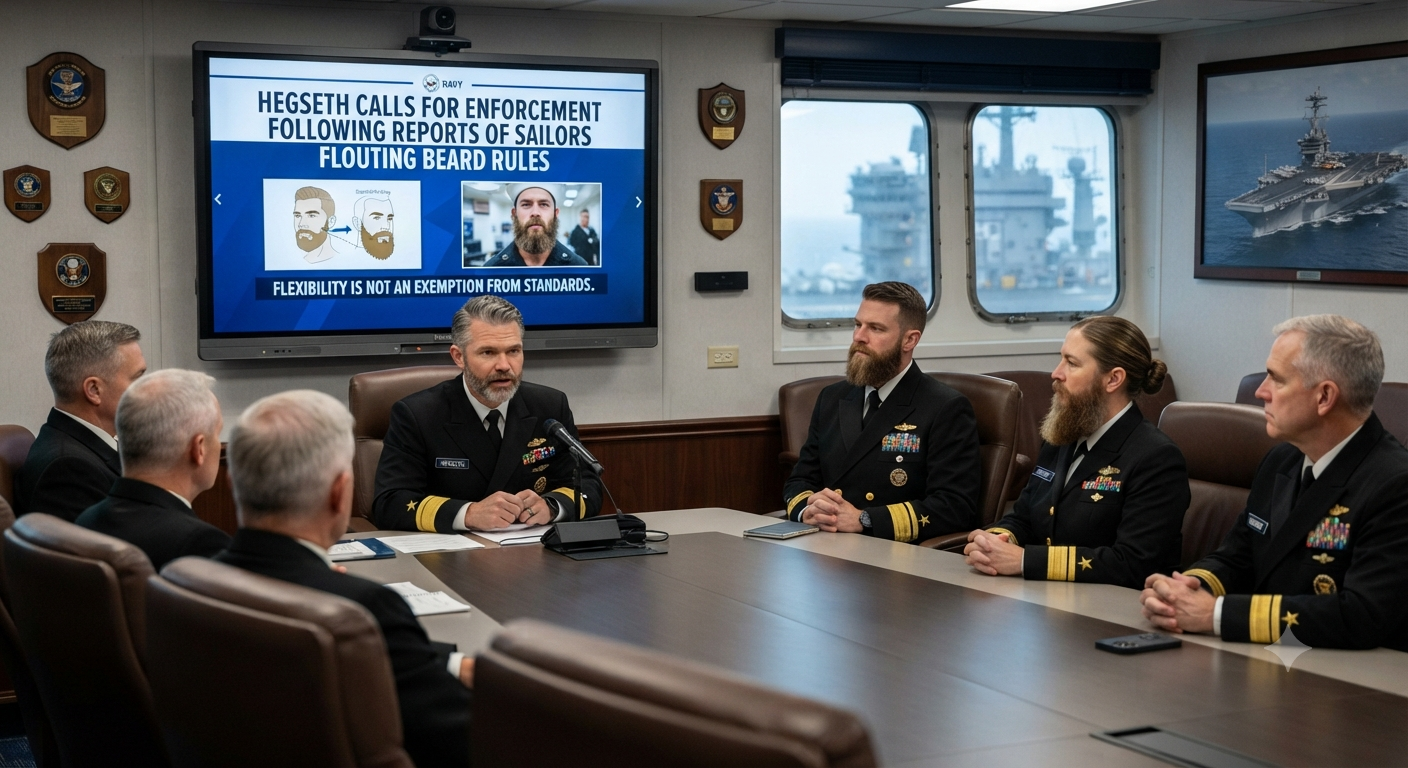
In a move that has sparked intense debate within the naval community, Secretary of Defense Pete Hegseth has formally called for stricter enforcement of military grooming standards. This directive follows mounting reports that numerous sailors have been flouting the newly implemented beard policy, which was intended to provide limited flexibility while maintaining the disciplined appearance traditionally associated with service members.
The Context of the Beard Policy
The policy in question was designed to modernize naval grooming standards, allowing for a degree of individual expression that many advocates argued would improve morale and recruitment efforts. For years, the debate over beards in the military had pitted traditionalists, who emphasize uniformity and discipline, against those who argue that such standards are outdated and restrict the ability to recruit a modern, diverse workforce.
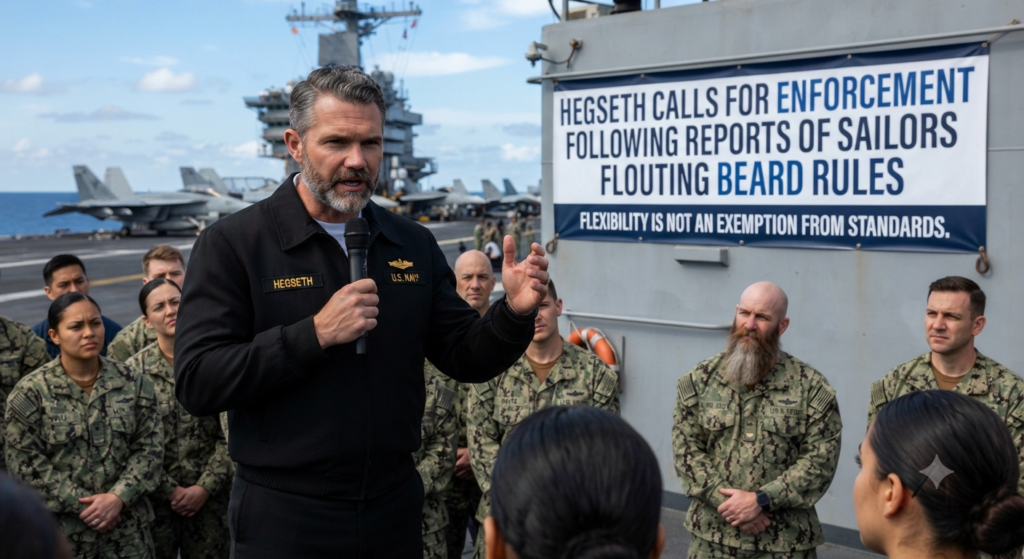
Under the specific guidelines, sailors were permitted to maintain facial hair provided it remained neatly trimmed and did not interfere with the proper seal of protective equipment, such as gas masks. However, in the months since the policy’s rollout, concerns have emerged regarding the consistency of its application.
Reports of Non-Compliance
According to recent reports, a significant number of sailors have interpreted the policy as a blanket permission to grow facial hair without adhering to the strict grooming requirements. Field reports from various naval installations indicate that “scruffy” or unkempt appearances have become increasingly common, leading to complaints from senior leadership and concerns regarding military bearing.
Hegseth’s directive emphasizes that the “flexibility offered by the policy is not an exemption from military standards.” The Secretary has expressed frustration that the initiative, which was meant to be a morale booster, has instead resulted in a perception of laxity.
Hegseth’s Call to Action
In his formal communication to naval leadership, Hegseth outlined several key steps intended to curb the trend of non-compliance:
- Mandatory Inspections: Commanders are now required to conduct regular grooming inspections to ensure that any facial hair remains within the established parameters.
- Clarification of Standards: The Secretary has ordered the issuance of visual aids and updated handbooks to clarify exactly what constitutes a “neatly trimmed” beard.
- Accountability Measures: Leadership has been instructed to utilize existing disciplinary channels for persistent offenders who refuse to comply with the grooming guidelines.
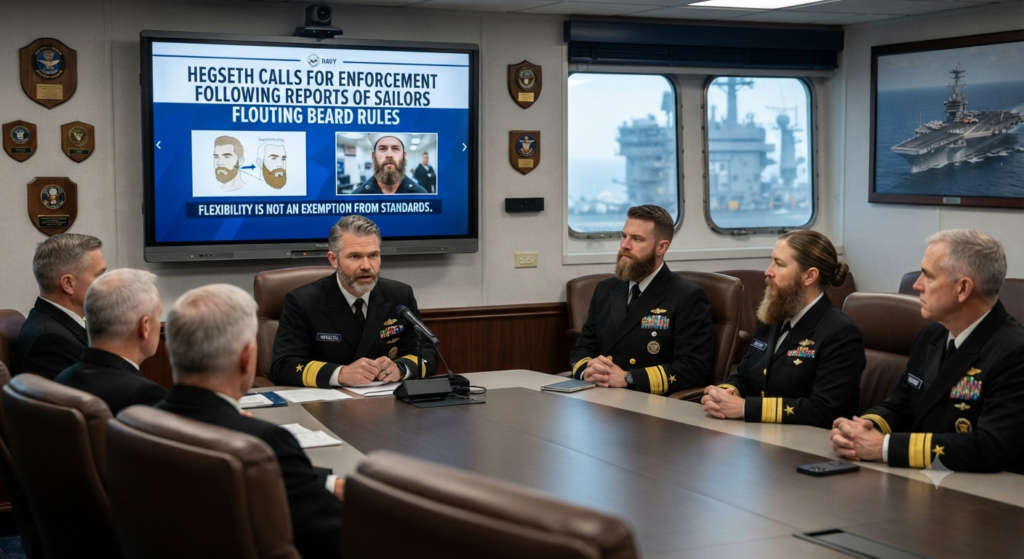
“The goal of this policy was to reflect the modern world while respecting the traditions of the Navy,” Hegseth stated. “However, when the standards that bind our service together are ignored, we lose the very discipline that makes us effective.”
The Tension Between Tradition and Modernization
The reaction to Hegseth’s call for enforcement has been mixed. Supporters of the Secretary’s stance argue that the military is not a place for individual fashion choices and that the “slippery slope” of lax grooming can lead to a broader degradation of discipline. They maintain that the uniform—and the way it is worn—is symbolic of the commitment sailors make to the nation.
Conversely, critics suggest that the focus on beards is a distraction from more pressing issues, such as fleet readiness, training deficiencies, and the mental health of service members. Some argue that by focusing so heavily on grooming, leadership is failing to address the underlying reasons why sailors may be pushing the boundaries of the policy in the first place—a potential sign of dissatisfaction with the current cultural climate of the Navy.
Implications for the Future
The Navy now faces the delicate task of balancing Hegseth’s demand for order with the reality of a workforce that has already begun to shift its cultural expectations. How commanders choose to implement these stricter enforcement measures will likely determine whether the situation resolves or leads to further friction within the ranks.
As the Navy moves forward, the “beard issue” serves as a microcosm of a larger challenge: how to maintain the rigid discipline required for combat readiness while adapting to the preferences of a younger generation of sailors. Secretary Hegseth has made his position clear: the rules may be modern, but the standard of compliance remains as traditional as ever.




Leave a Reply